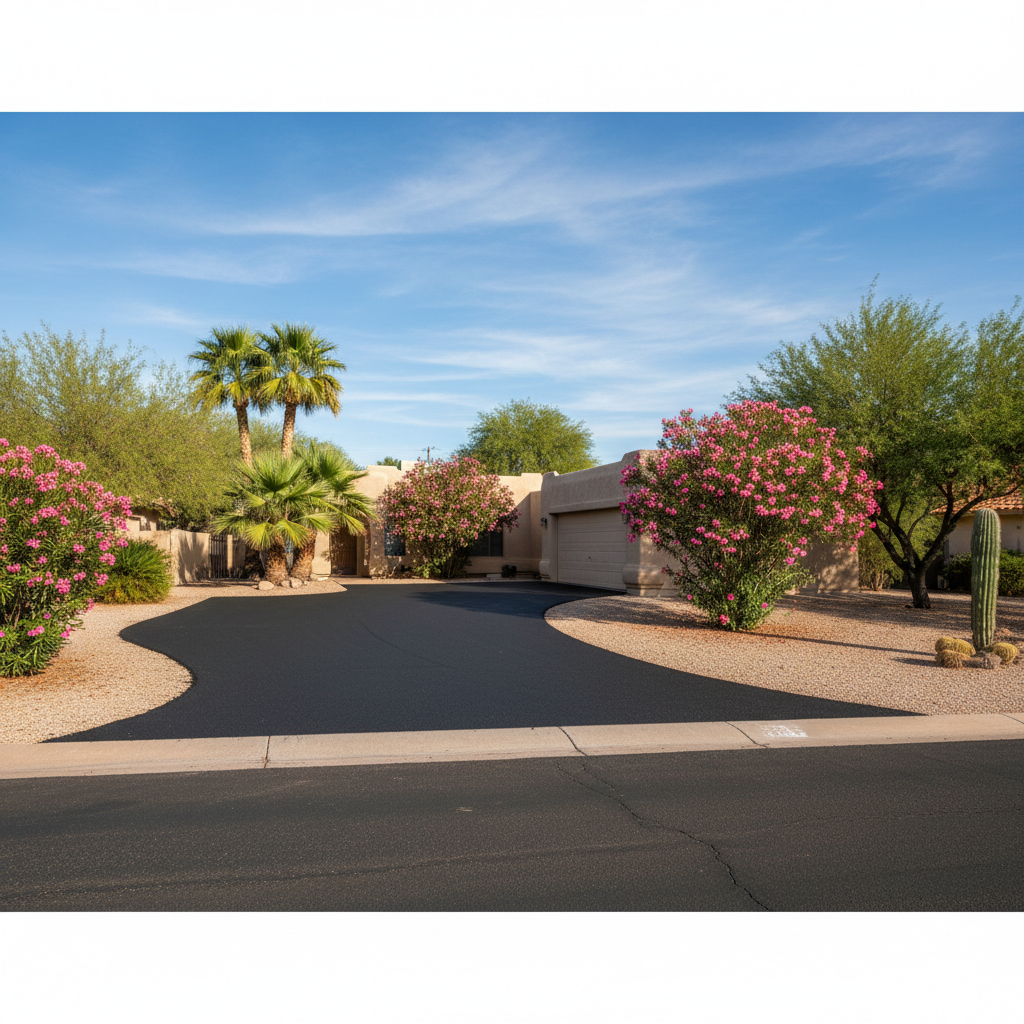
Ever wonder why some driveways look brand new for years while others crack and crumble way too fast? It's not always about the initial installation, though that's a big part of it. A lot of it comes down to how you treat it after it's laid down, especially here in Peoria where the sun doesn't play nice.
I've been working with asphalt for a long time, and I've seen firsthand what our intense Arizona climate does to driveways. That scorching summer sun, the monsoon rains, even the cooler winters – they all take a toll. But with a little attention, you can seriously extend the life of your paved surfaces.
Protecting Your Pavement from Day One
The best way to extend your driveway's life starts almost immediately. Once your new asphalt is down, you need to let it cure properly. That means no heavy vehicles, no sharp turns, and definitely no parking anything with a kickstand on it for at least a few days, sometimes longer depending on the mix and weather. Think of it like letting concrete set; it needs time to harden up.
After that initial cure, the biggest thing you can do is sealcoat. I can't stress this enough for Peoria homeowners. Sealcoating isn't just about making your driveway look pretty and black again. It's a protective barrier against UV rays, water penetration, and even oil spills. Think of it as sunscreen for your asphalt. Our sun here is brutal, drying out the binders in the asphalt, making it brittle and prone to cracking. A good sealcoat every 2-3 years, depending on traffic and sun exposure, will dramatically slow down that aging process.
Regular Maintenance: Simple Steps, Big Impact
Beyond sealcoating, there are some easy things you can do regularly:
- Keep it Clean: Sweep off dirt, leaves, and debris. Organic matter can trap moisture, and fine dust can actually accelerate wear. If you've got a lot of mesquite trees dropping leaves in your yard, make sure you're clearing them off your driveway regularly.
- Address Spills Immediately: Oil, gas, and other automotive fluids are asphalt's worst enemies. They break down the petroleum binders in the asphalt, softening it and leading to deterioration. Keep some kitty litter or absorbent material handy and clean up spills as soon as they happen.
- Watch for Weeds: Weeds and grass can sprout through tiny cracks, and as they grow, their roots expand those cracks. Pull them out, or use a weed killer specifically designed for paved surfaces.
- Manage Drainage: Make sure water isn't pooling on your driveway. Proper drainage is crucial. If you see puddles forming after a rain, that's a sign of a potential problem that can lead to accelerated breakdown.
Warning Signs: Don't Wait Until It's Too Late
Your driveway will usually give you clues when something's wrong. Don't ignore these:
- Cracks: Small, hairline cracks are normal over time, especially with our ground shifting a bit here in the Valley. But if they start widening, connecting, or forming alligator-skin patterns, that's a red flag.
- Potholes: These usually start as small depressions that collect water, then expand rapidly. They're not just ugly; they're a tripping hazard and can damage vehicles.
- Fading and Discoloration: If your asphalt is looking gray instead of black, it means the surface is oxidizing and losing its protective oils. This is a sign it's time for sealcoating.
- Raveling: This is when the aggregate (the small stones) starts coming loose from the surface. It indicates the binder is failing, often due to sun exposure and lack of sealcoat.
- Standing Water: As I mentioned, if water isn't draining off, it's going to find its way into the asphalt, freeze and expand in winter (though less of an issue here), or just sit there and soften the surface in the summer heat.
When to Call a Professional (Like Peoria Precision Asphalt)
You can handle the sweeping and the occasional spill, but some jobs are best left to the pros. You should definitely call us if:
- You see significant cracking: If cracks are wider than a quarter-inch, or you have extensive alligator cracking, it's beyond a simple DIY crack filler. We can assess if crack filling, patching, or even an overlay is needed.
- Potholes appear: While small potholes can sometimes be patched by a handy homeowner, a professional repair ensures proper compaction and a lasting fix that blends in.
- Drainage issues are present: If water is consistently pooling, it might indicate a sub-base problem or an issue with the original grading. That's a job for experienced eyes.
- It's been years since your last sealcoat: If your driveway is looking faded and brittle, it's time for a professional sealcoat application. We use commercial-grade materials and techniques that last.
- You're considering a complete overhaul: If your driveway is old, severely damaged, and showing signs of widespread failure, it might be time for a full replacement or a significant overlay. We can give you an honest assessment and a clear plan.
Don't wait until your driveway is a total mess. A little preventative care and timely professional attention can save you a lot of money and headaches down the road. Keep an eye on your asphalt, especially with our strong Arizona sun, and it'll serve you well for years to come.